


Dental implants are perhaps the most predictable procedures in restorative dentistry. Research published in the Journal of Dentistry suggests that 10-year survival rates for dental implants are now around 96.4%, and for most patients book an appointment to discuss implant treatment, the result will be a replacement tooth that is stable and long-lasting. But when implant failure does occur, it is almost never due to a single problem, and the evidence points to a combination of biological, behavioural, and procedural factors at work, suggesting that most failures are to some degree preventable.
The 10-year survival rate for dental implants is approximately 96.4%. This is truly an impressive figure, but it also means that a significant number of implants will fail, and knowing why is what makes a patient better prepared versus one who is taken by surprise.
The Infection That Most Implant Failures Come Back To
The most frequently observed condition in the literature on late implant failure is peri-implantitis, an inflammatory disease affecting the tissue surrounding an implant. It is caused by chronic inflammation due to bacterial plaque accumulation around the implant surface, which leads to the gradual destruction of the bone supporting the implant. Untreated, the outcome is implant loosening and eventual loss. Peri-implantitis affected 19.5% of implant patients and 12.5% of implants, according to a 2022 systematic review of 57 studies, which is far more common than patients would anticipate at the outset of the procedure.
Peri-implantitis can be particularly difficult to detect in the early stages because it is often slow and asymptomatic in its onset. Patients who have regular maintenance appointments allow the clinician to see early bone loss before it becomes irreversible, whereas those who miss those visits remove the early warning system, making the condition treatable only if caught early, but with the damage to the supporting bone that has accrued prior to diagnosis being largely irreversible. That is why maintenance frequency is not an optional extra after implant placement; it is a core part of protecting the investment.
Smoking Changes the Risk Calculation Significantly
Smoking is the patient-related factor with the best-defined risk for implant outcomes, with a 2.59-fold increase in risk of early implant failure in smokers versus non-smokers in a 2024 systematic review and meta-analysis of more than 59,000 implants, with the increased risk concentrated in the first few months post-surgery, when the osseointegration (the process of bone bonding to the implant surface) is most critical. Smoking inhibits blood flow, reduces oxygen availability to healing tissue, and directly interferes with the cellular processes required for successful integration.
Smoking has also been associated with increased incidence of peri-implantitis and increased marginal bone loss over time, so the risk does not go away at the end of the initial healing phase. Patients who continue to smoke after implant placement have an increased risk profile for the life of the implant, and the evidence for these conversations with clinicians during treatment planning is significant. Pre- and postoperative cessation of smoking is one of the few things a patient can do to significantly enhance their own long-term success.
Bone Quality Is the Foundation Everything Else Depends On
When there is insufficient bone volume or density to provide adequate support for an implant to integrate and remain stable under normal chewing forces, then early failure is much more likely. Factors that decrease the amount of bone available include age-related bone changes, osteoporosis, extended periods of time without a tooth in that location, and prior bone loss from gum disease. Studies of long-term implant success rates showed that patients 65 and older had lower success rates than younger groups, not because implants do not work in older patients, but because the biological environment for healing is more variable and often more challenging.
Bone grafting procedures can rebuild lost volume before implant placement, but they add time, cost, and an additional surgical stage to the treatment. This is why it is important to identify bone deficiencies through three-dimensional imaging before any surgery begins; otherwise, clinicians will only discover the problem during the procedure itself.
When the Technique or the Restoration Is the Problem
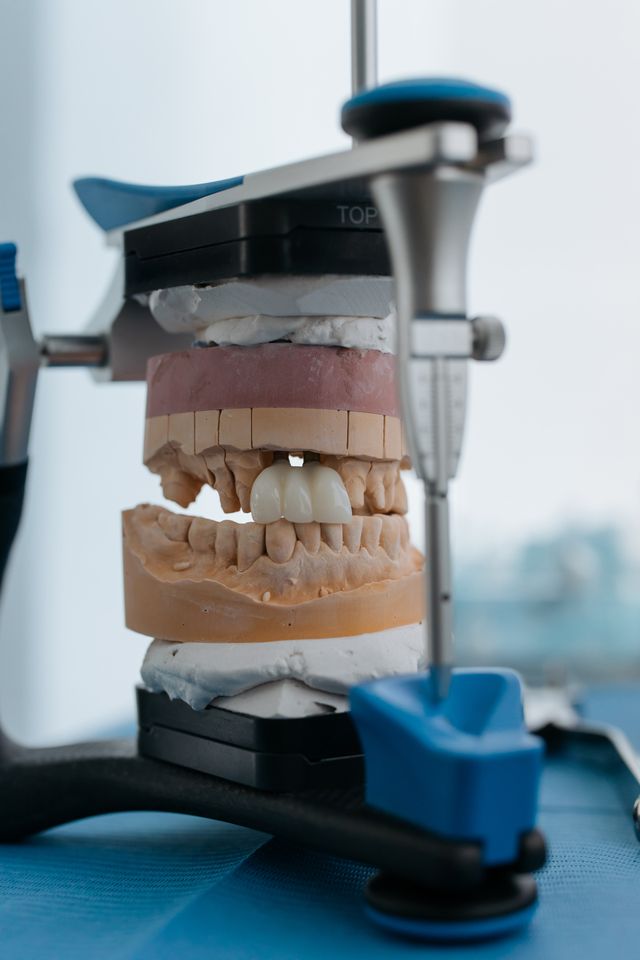
Not all implant failures originate with the patient, as improper implant positioning, inadequate treatment planning, excessive loading forces, and poorly designed restorations can all place undue mechanical stress on the implant-bone interface. Patients with bruxism, which involves grinding or clenching of the teeth, produce much greater biting forces than normal, which can lead to screw loosening, component fractures, and accelerated bone loss around the implant. Bruxism is detected prior to treatment, and occlusal splints are incorporated into the management plan.
Another source of patient-specific variation is systemic health conditions. Uncontrolled diabetes interferes with healing and increases the risk of infection. Conditions that alter bone metabolism also affect the long-term predictability of implant stability. The fact that implants look like a near-guaranteed success at the population level does not mean that they are a near-guaranteed success for every individual patient: a patient who has good oral hygiene, good bone, no smoking history, and good control of systemic health has a significantly different risk profile from one who has several of these factors at the same time, and that difference should be understood and planned for in the conversation before treatment, not after.


